Get branding tips and expert advice delivered straight to your inbox.

When Chobani first hit the yogurt aisles in 2007, most Americans had never heard of Greek yogurt. The product was richer and less sweet than Dannon or Colombo, with less sodium and more protein. These health benefits of Chobani resonated with American consumers, driving Greek yogurt from less than 1% market share to nearly 50% in just a few years.
Then the inevitable occured. Seeing dollar signs, Dannon and Colombo introduced their own Greek yogurt products. Soon countless other copycat brands followed. Just 10 years after Chobani was introduced to the market sales of spoonable yogurt began to decline. Mintel's 2017 report on the yogurt segment unequivocally states that Greek yogurt's "novelty wore off." As a result Chobani's brand lost its competitive edge and sales began to slip.
"Virtually everybody's copied us," said Peter McGuinness, Chobani CMO. "I'm not here to pick on the competition, but it's not been good for the category."
| Brands | Successful Sections | Needs Improvement |
|---|---|---|
| Social Media: Twitter | Overall layout, logo guidelines, typography guidelines | Missing color identification, no photographic guidelines, no mission and vision statement |
| Retail: Walmart | Mission and vision statement, logo guidelines, color guidelines, typography guidelines | No photographic guidelines, overall layout too long |
McGuiness' hand was forced; he'd need to identify new points of differentiation to stay one step ahead of the competition. A rebrand, or as we'll argue below, "an expansion" of the brand was in order.
VIDEO: What is digital asset management?
What is product differentiation?
Product differentiation is a marketing strategy that uses a brand's unique characteristics to its advantage when competing for audience attention and dollars. There are countless ways to differentiate, but here are a few of the most common:
- Features – What can your product do better, faster, more simply, or more economically?
- Proprietary technology – What innovation, patents, or other technological advances can only your brand claim? Proprietary technology gives brands an edge by being inimitable.
- Design – Is your product more beautiful, more functional, or easier to use?
- Customer Service - Consider the entire experience around your product or service. How does your brand serve your customer better than anybody else?
Brands seeking to compete — particularly in crowded markets — can realize significant benefits by identifying and executing on a deliberate differentiation strategy.
Benefits of strong and favorable differentiation
- Grabs prospects' attention — By intentionally calling out how your brand differs from the competition, you draw attention to the unique attributes of your brand that are meaningful to your target customer.
- Takes the focus off of price – Unless you have massive advantages in manufacturing or economies of scale, it's very difficult to sustainably differentiate on price. Differentiation based on other attributes of your brand takes the focus off of price and helps your brand avoid getting sucked into pricing wars.
- Creates brand loyalty – Your brand's unique points of differentiation matter to a specific segment of your audience. By directly speaking to these attributes, you create brand loyalty with these consumers.
While differentiation can help your brand realize these benefits, there are also many signs that are indicative of a weak differentiation strategy.
Signs of a weak differentiation strategy
- Copycats — Your brand's points of differentiation should ideally be attributes that are not easily replicable.
- Price undercutters — Almost all brands will face competition from other companies that undercut them on price. If this occurs and your brand's only point of differentiation is price, that's trouble.
- Focusing on changing demands or expectations from customers — Don't differentiate on something that can easily become obsolete. This is why you see technology companies differentiating on innovation or other consistent attributes that run throughout their products rather than on the features or functionality of a specific product that will eventually become obsolete.
- Hyper-niche differentiation — If your point of differentiation only matters to a very narrow segment of customers, you may end up alienating potential customers.
EVERY product can be differentiated
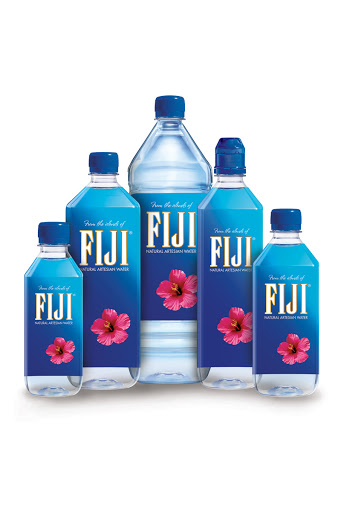
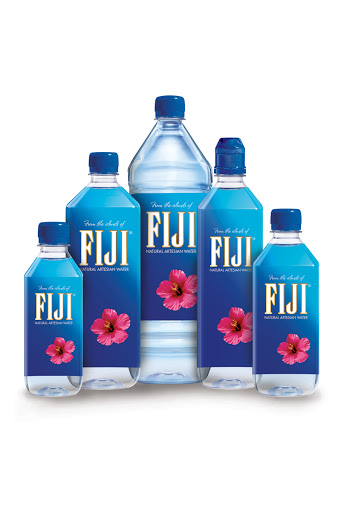
Many brand managers dismiss differentiation by saying they sell a commodified product. But all products can be differentiated. One example: Fiji Water, a brand that commands a premium price based on the source and taste of their water. They sell the same combination of two hydrogen atoms and one oxygen atom as their competitors, yet they charge multiple times the price.
https://cdn.bfldr.com/I6FML9WY/at/ptrihw-fci72g-e7w2nl/adam.gif?dimensions=1536x2048&classes=full


img tag (not using markdown)
How to build your brand differentiation strategy
The point of differentiation that you choose for your brand can be an attribute, a benefit, or a feature, but the process of identifying your strategy is alarmingly simple.
"Start with what the brand truthfully, honestly, and accurately is," says Weintraub. "You relate that to how the brand is different or better than other brands on the market. There's something truthful, factual, actual, about the brand itself that's better. You need to find that and then match that up with some group of target consumers — not all consumers, but a particular set of consumers for whom that particular benefit is really important."
Competitor differentiation research questions
- How do they describe their product? What terms and phrases do they use? Do they fit into an existing category, or are they trying to create their own?
- What do they stand for? If you had to pick three words to associate with the product, which three words would you choose?
- What are they promising? What value do they claim to deliver? What unique attribute or outcome are they flaunting?
- Which features and benefits are they highlighting? Are there certain bells and whistles that they talk about more than others?
- Who are they talking to? Are they addressing a specific audience? Do they customize their language and topics based on certain demographics or segmentation?
- What is the brand personality? Are they quietly knowledgeable? Irreverent? Authoritative? Highly technical? Straightforward? Humorous? What is the product "voice" like?
How brands can discover new points of differentiation
Identifying new points of differentiation is a skill that can be learned and developed. "A company has the opportunity to differentiate itself at every point where it comes in contact with its customers — from the moment customers realize that they need a product or service to the time when they no longer want it and decide to dispose of it," write Ian MacMillian and Rita Gunther McGrath in their article Discovering New Points of Differentiation published in Harvard Business Review. "We believe that if companies open up their creative thinking to their customers' entire experience with a product or service — what we call the consumption chain — they can uncover opportunities to position their offerings in ways that they, and their competitors, would never have thought possible."
MacMillian and McGrath's process begins with what they call "mapping the consumption chain," which captures a customer's experience in its entirety with a particular product or service. The second phase of their process, "analyzing your customer's experience," consists of a brainstorming session about each step in the consumption chain. The goal of the session is to assemble an inventory of all possible points of differentiation by considering the entirety of the customer's experience.
The process is replicable no matter the industry your brand competes in, but doesn't alone deliver a successfully executed differentiation strategy.
Rebranding to remain competitive in a crowded market
Many brands, like Chobani, rode a strong and favorable differentiation strategy to market dominance only to watch their competitive edge evaporate amidst a sea of copycat contenders hawking similar attributes. When that happens, many brand managers feel that they're faced with no other option than to rebrand.
"I don't believe in the notion of rebranding; I believe in the notion of growing a brand because to rebrand it sounds to me like you have to change what the brand is," says Weintraub. "You can't change what the brand is because you don't erase people's memories, so their memories or their perceptions of the brand aren't eliminated, ever."
This reality produces a conundrum from brand managers; if they can't rebrand, how can they change the perceptions of their brand in a way that will once again strongly resonate with a segment of target customers?
"What you can do is identify aspects of the brand that maybe haven't been effectively communicated or that were always there that people didn't talk about," says Weintraub. "You don't change the brand, but you find something in the brand, in the product ideally, that nobody knows about, or you express it in a way that's clearer, more understandable, or more relatable to a consumer. Not all consumers, but a particular target consumer so that she or he comes to appreciate what that brand is."
Key takeaways
- Your brand's points of differentiation are truths that are right in front of you — not invented fictions.
- There is no such thing as a commodity product; every product can be differentiated. Consider the generic product versus the offered product.
- Differentiation takes the emphasis off of price and strategically positions your company's unique attributes as different and better for a subset of target customers that care about the attribute, benefit, or feature.
- You can't fully "rebrand" a product because you can't erase a consumer's memory or perception of your brand. Seek to find a truth in the brand and communicate it in a way that's clearer, more understandable, or more beneficial to the consumer.
- Link to new page
in self-closing tag,
<token-abc123 />